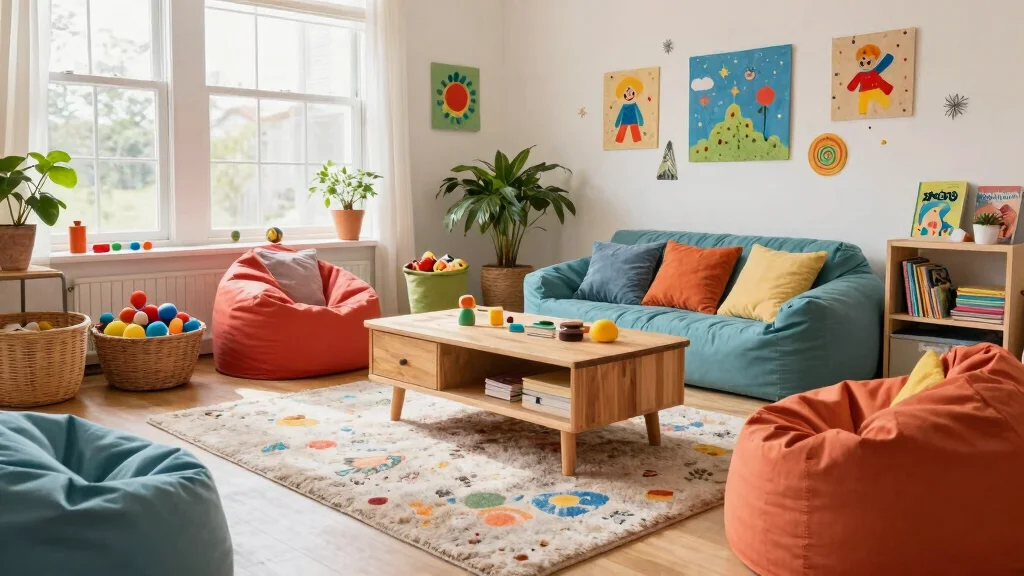
Creating a fun and functional living room for kids can feel like a daunting task. With all the toys, games, and creative energy they bring, you might wonder how to design a space that is both kid-friendly and stylish. This post is here to help. I’ve gathered together 12 kids living room ideas that embrace durability, style, and eco-friendly choices, ensuring your living area remains inviting and practical for the little ones.
If you’re a parent, grandparent, or caregiver who wants a space that encourages play and relaxation, this guide is perfect for you. You care about making your home a safe haven for children, one that sparks joy and creativity. With these ideas, you can transform your living room into a colorful, engaging environment that blends seamlessly with your home’s aesthetic.
You’ll discover ways to incorporate playful furniture, colorful decor, and innovative storage solutions. You’ll also find tips for creating cozy seating areas and personalized touches that make the space uniquely yours. Each idea is designed to be practical yet imaginative, ensuring that your living room is not just a place for kids to play but a cozy retreat for the whole family.
Key Takeaways
– Incorporate eco-friendly playful furniture that withstands wear and tear while adding character to the room.
– Use colorful decor with a purpose to stimulate a child’s creativity and enhance the overall ambiance.
– Implement innovative storage solutions to keep toys organized and maintain a clutter-free space.
– Create cozy seating areas where kids can relax or enjoy reading, encouraging comfort and calm.
– Design themed zones for fun to inspire imaginative play and make the space feel dynamic and exciting.
1. Eco-Friendly Playful Furniture
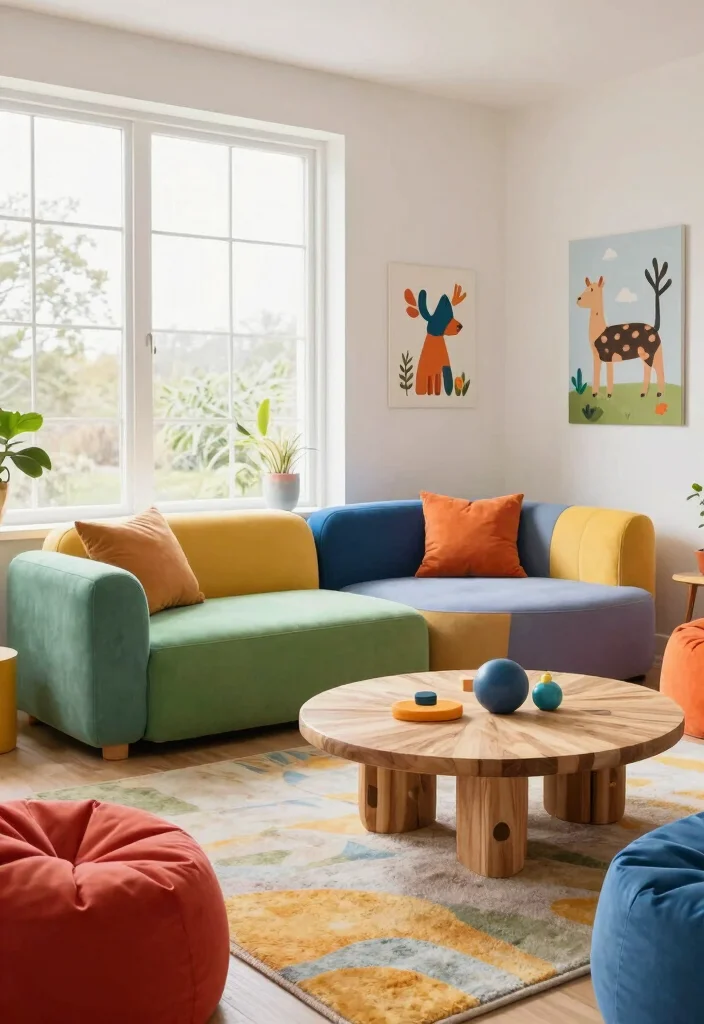
Playful furniture is a delightful addition to a kids’ living room, merging fun designs with sustainable materials. This combination works beautifully because it not only captivates children’s imaginations but also supports an eco-friendly lifestyle. Imagine vibrant, low tables crafted from reclaimed wood or whimsical stools made from recycled plastics, creating a lively atmosphere. Rounded edges enhance safety, while bright colors inspire creativity and joy, making every corner of the room inviting and engaging.
To make the most of this approach, focus on versatile pieces that can adapt as your child grows. Explore brands committed to sustainability, ensuring your choices are both stylish and responsible. Look for furniture that is easy to clean, as removable covers can be lifesavers during messy playtimes.
Consider these tips to enhance your playful furniture selection:
– Pair colorful stools with a sturdy, recycled wood table.
– Install modular couches that can be rearranged as needed.
– Use vibrant cushions to add comfort and safety.
This thoughtful selection not only elevates the room’s aesthetic but also promotes a safe and playful environment, inviting creativity and comfort.
Kids’ living rooms thrive on imagination, not waste. These eco-friendly, playful pieces—made from reclaimed wood or recycled plastics—support kids living room ideas with durable style, while color-rich surfaces and rounded edges keep playtime safe.
Eco-Friendly Playful Furniture
Editor’s Choice




2. Colorful Decor with a Purpose
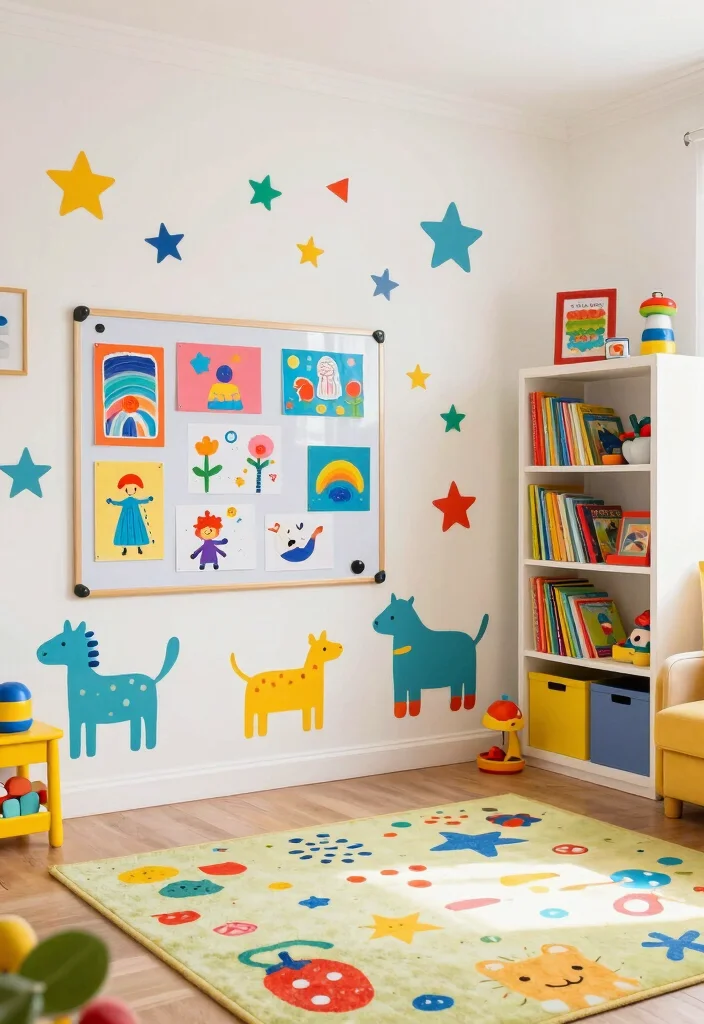
Incorporating colorful decor into your kids’ living room can transform the space into a vibrant haven. Bright colors invigorate the atmosphere, making it joyful and energetic. Think about using non-toxic wall decals for easy decoration that sparks imagination. Engage kids with interactive elements like chalkboard walls or magnetic boards, allowing them to showcase their artwork creatively. Colorful shelving can display beloved books and toys, marrying functionality with charm.
To achieve a lively space, consider DIY projects with your kids to create unique art pieces together. Use natural fibers for cushions and curtains to maintain an eco-friendly approach. Bold rugs can define play areas while adding warmth and color to the overall design.
Try these ideas to brighten up your decor:
– Explore DIY painted frames to personalize your decor.
– Incorporate natural fiber cushions for comfort and style.
– Use vibrant rugs to delineate spaces for different activities.
By weaving colorful decor into your living room, you not only uplift the environment but also foster a space that encourages creativity and self-expression.
Colorful Decor with a Purpose
Editor’s Choice


3. Innovative Storage Solutions
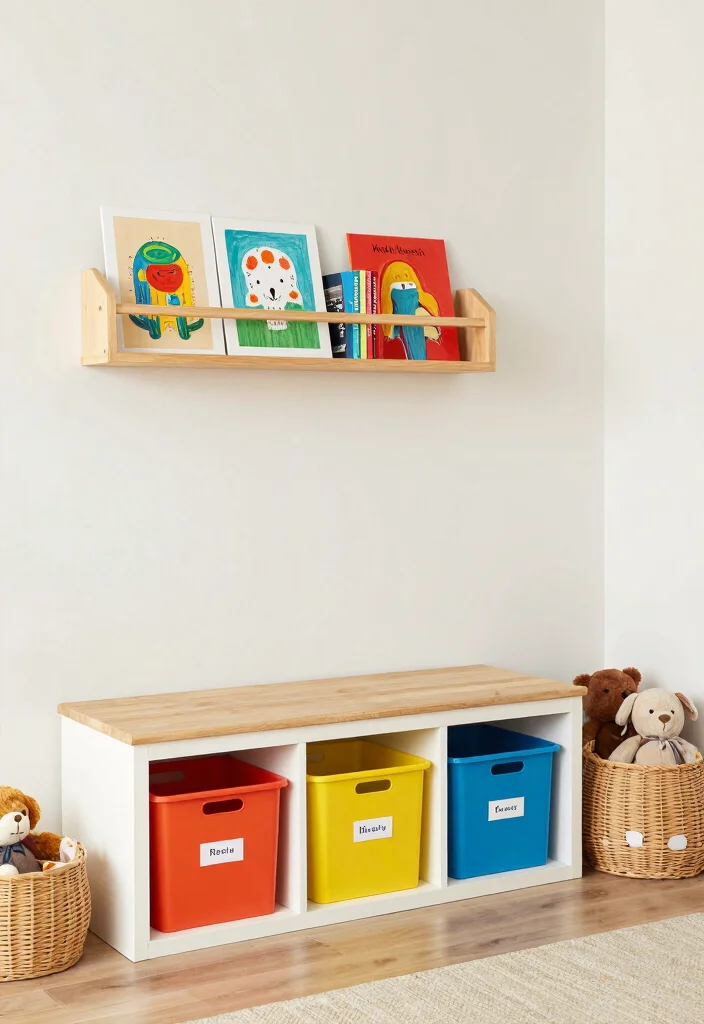
A kids’ living room can easily become cluttered, but with clever storage solutions, you can keep it organized and stylish. Multi-functional furniture, like ottomans with hidden compartments or benches that offer shelving, can serve dual purposes effectively. Wall-mounted shelves can display toys while doubling as art showcases, merging organization with flair. Use woven baskets for a chic storage solution that kids can access easily.
Make cleaning up fun by labeling storage bins, helping kids learn organization skills. Color-coded bins can categorize toys, turning tidying up into a playful task. Consider vertical storage options to save space in smaller areas, creating a neat and spacious feel.
Here are some practical storage tips:
– Label bins clearly to encourage kids to tidy up.
– Use color-coded systems for easy toy organization.
– Maximize vertical space with wall shelves.
A well-organized living room not only looks great but also teaches children responsibility and the importance of caring for their belongings.
4. Cozy Seating Areas
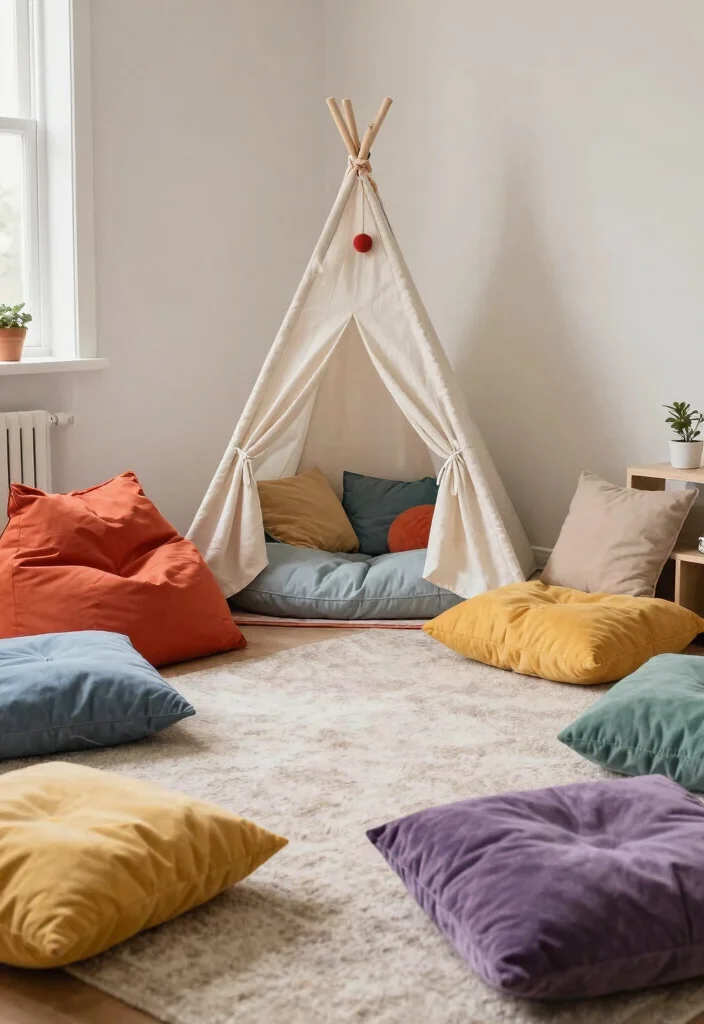
Cozy seating is essential in a kids’ living room, creating inviting spots for reading or imaginative play. Designate areas where children can snuggle up with books or engage in creative activities. Floor cushions and oversized bean bags offer comfort and flexibility, making it easy to rearrange seating as needed. A small nook with a tent or canopy adds a whimsical touch, inviting children to explore their imaginations. Soft throws and colorful pillows enhance comfort and invite lounging.
Opt for seating made from organic materials to ensure safety and comfort. Mixing different seating styles keeps the space playful and welcoming. A reading corner with a fun lamp can encourage quiet time and a love for books.
Enhance your seating arrangement with these ideas:
– Choose organic materials for safe and comfy seating.
– Mix various styles for a playful atmosphere.
– Create a reading nook with cozy lighting.
Comfortable seating areas not only enhance relaxation but also foster a love for reading and creativity, making the living room a cherished space.
Key Trade-offs & Our Top Pick
Option 1: Eco-Friendly Playful Furniture
– Pros:
– Made from sustainable materials like bamboo or recycled wood.
– Bright colors and unique designs make them appealing to kids.
– Cons:
– May cost more than conventional furniture.
– Limited styles available compared to mainstream options.
– Best for: Families who prioritize sustainability and want playful aesthetics in their living room.
Option 2: Colorful Decor with a Purpose
– Pros:
– Adds a vibrant touch that can stimulate creativity in kids.
– Functional items, such as wall decals or rugs, can double as play areas.
– Cons:
– Bright colors may fade over time, especially if exposed to sunlight.
– Can be overwhelming if not balanced with neutral tones.
– Best for: Parents looking to create an energetic space that inspires play and creativity.
Option 3: Innovative Storage Solutions
– Pros:
– Keeps toys and books organized, reducing clutter.
– Many options are multi-functional, serving as seating or decor.
– Cons:
– Some storage solutions may be difficult for younger kids to access.
– Assembly can be complicated for certain designs.
– Best for: Families with limited space who need efficient storage without sacrificing style.
Option 4: Cozy Seating Areas
– Pros:
– Soft furniture encourages relaxation and family bonding.
– Options like bean bags or floor cushions are lightweight and easy to move.
– Cons:
– May not provide adequate support for older kids or adults.
– Some materials may not be durable for heavy use.
– Best for: Homes where families spend a lot of time together and enjoy casual hangouts.
Option 5: Themed Zones for Fun
– Pros:
– Creates a unique environment that can spark imagination.
– Themes can cater to kids’ interests, making the space more engaging.
– Cons:
– Can be expensive if you go all-in on decorations and furniture.
– Themes may need to be updated as kids grow older.
– Best for: Parents who want to create a special space tailored to their child’s interests.
Expert Recommendation:
Best Overall: Eco-Friendly Playful Furniture
Eco-friendly playful furniture stands out as the top choice for most families. It offers a perfect blend of sustainability, fun designs, and durability. Investing in this option means you’re not only creating a beautiful living room for your kids but also contributing positively to the environment. With its vibrant styles, it can easily adapt as your child grows, making it a versatile choice.
Why We Picked This:
While eco-friendly playful furniture is our top pick, some families may lean towards colorful decor if they want quick and bold changes. On the other hand, if storage is your main concern, innovative solutions can keep your space tidy and functional. Ultimately, the best option depends on your family’s needs and style preferences. Evaluate what matters most to you and your children when making your selection!
5. Nature-Inspired Elements
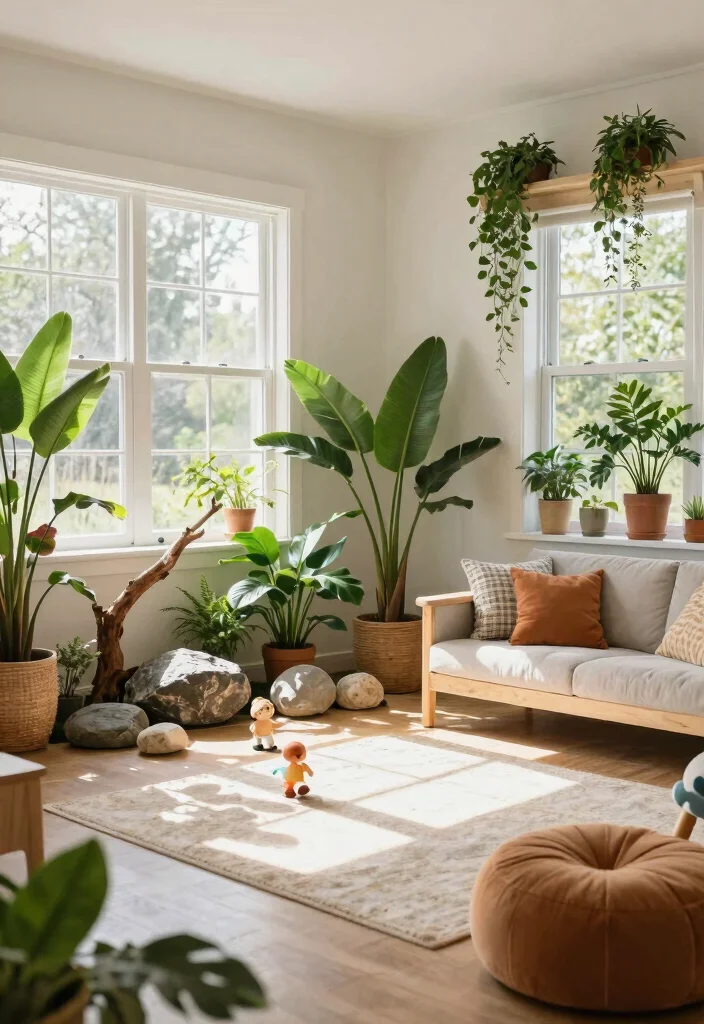
Bringing in nature-inspired elements can create a soothing and eco-friendly environment in your kids’ living room. Utilize furniture and decor made from plant-based materials to reflect the beauty of the outdoors. Incorporating indoor plants not only purifies the air but also infuses the space with a calming vibe. Earthy tones and greens in your color palette can mimic nature’s hues, creating a peaceful retreat. Consider a nature corner where kids can explore rocks, branches, and leaves, fostering a love for the outdoors.
Ensure all plants are non-toxic and safe for children to promote a secure environment. Maximize natural light to brighten the space, making it feel warm and inviting. When decorating, opt for biodegradable or recycled materials to emphasize sustainability.
Use these tips to enhance your nature theme:
– Choose safe, non-toxic plants for your decor.
– Maximize natural light for a bright atmosphere.
– Incorporate recycled materials in your design.
Integrating nature-inspired elements helps children connect with their environment while instilling eco-conscious values from a young age.
❝ For kids living room ideas that blend style with sustainability, choose plant-based furniture and add a simple nature corner with rocks and branches. Indoor plants purify the air, earthy tones calm restless energy, and practical, eco-friendly touches grow with your family. ❞
6. Themed Zones for Fun
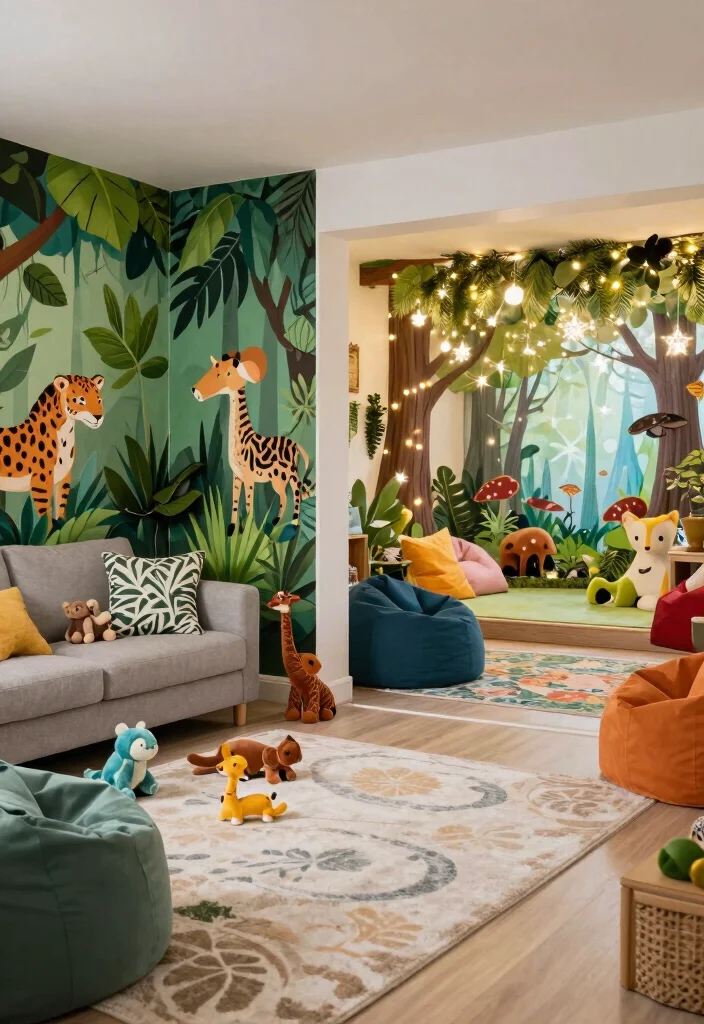
Creating themed zones in your kids’ living room can turn it into an imaginative adventure space. Whether you opt for a jungle theme with vibrant animal prints or a fairyland adorned with twinkling lights, these zones can ignite creativity. Distinct areas for reading, crafting, or imaginative play can be decorated to resonate with each theme. For instance, a reading nook can feature storybook illustrations, while a crafting corner can have colorful supplies on display for easy access.
Use removable wallpaper for quick updates as your child’s interests evolve. Fun accents like themed cushions and throws can tie the room together seamlessly. Consider creating a vision board area where kids can express their ideas and inspirations.
Here are some tips to create thematic zones:
– Use removable wallpaper for easy updates.
– Incorporate fun themed cushions to enhance the look.
– Designate a vision board area for creative ideas.
Themed zones enrich your living space, allowing kids to explore their creativity and immerse themselves in play.
Kids light up when a room has zones just for reading, crafting, and play. Themed zones in your kids living room ideas make mornings easier and creativity soar—practical magic you can see in every corner.
7. DIY Art and Craft Space
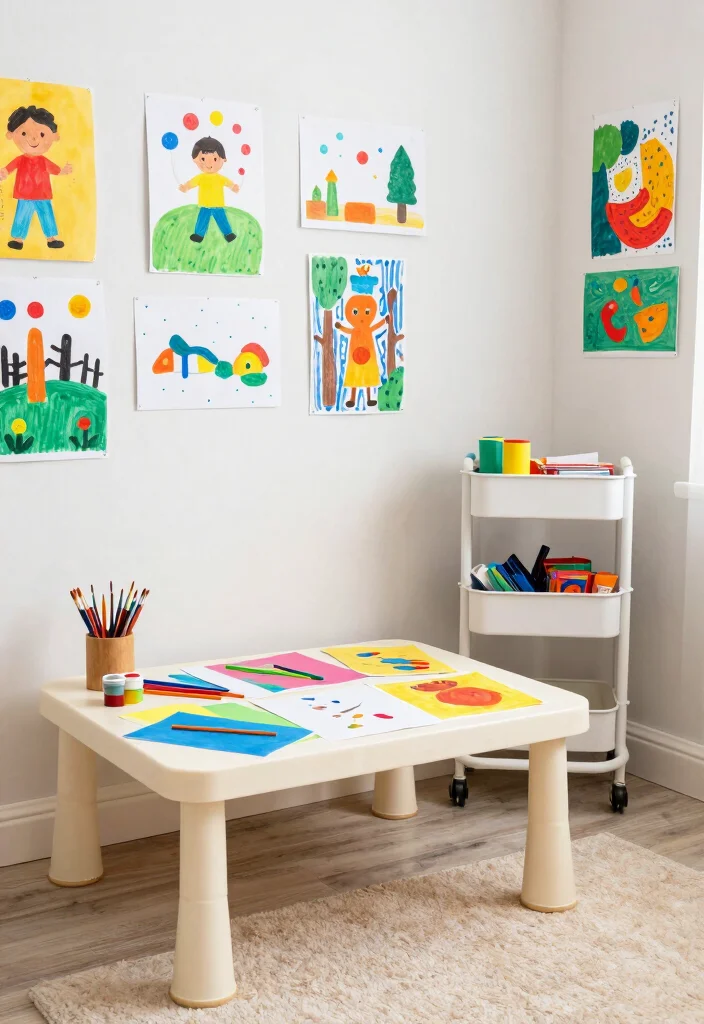
A dedicated art and craft space can inspire creativity and transform your living room into a vibrant hub of imagination. Set up a low table stocked with art supplies, making it easy for kids to tap into their creative side. Encourage the use of recycled materials for crafting and display their finished artwork on walls or bulletin boards. This area should be fun and functional, utilizing non-toxic supplies for a safe creative environment.
Schedule regular craft sessions to make art a beloved activity that everyone looks forward to. Keep the space colorful and inspiring with bright decorations and easily accessible supplies. Promote collaboration among siblings or friends to boost creativity and social skills.
Consider these ideas for your DIY space:
– Schedule regular craft sessions for family fun.
– Keep supplies colorful and accessible for inspiration.
– Encourage group projects to enhance social skills.
A DIY art and craft space nurtures imagination while keeping your living area lively and engaging.
8. Sensory Play Areas
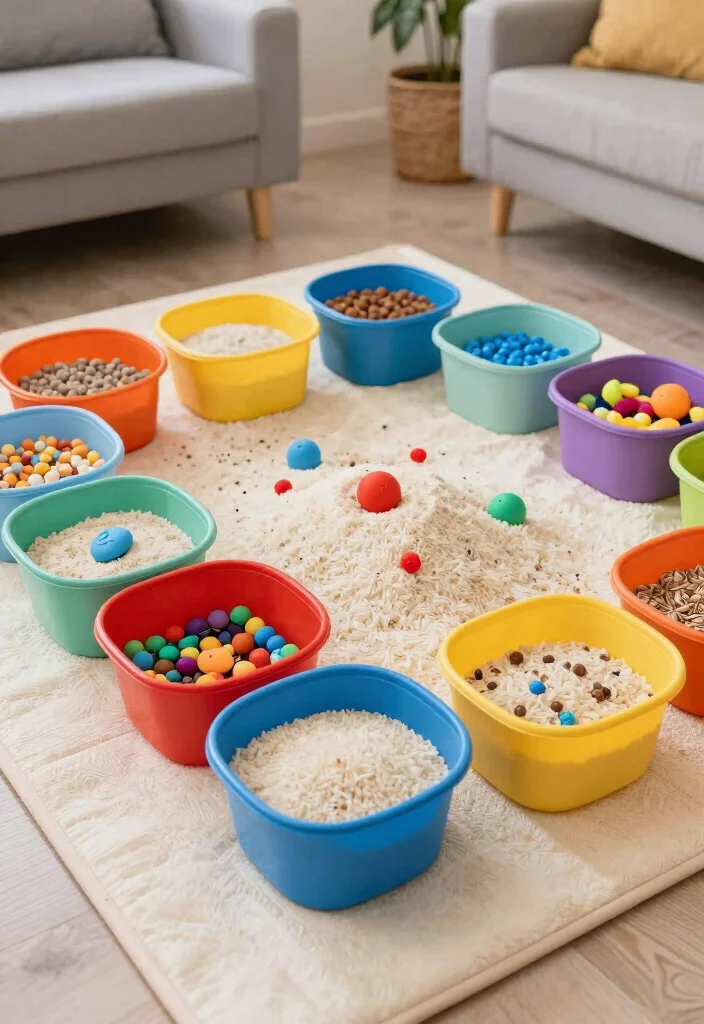
Creating sensory play areas in your living room can significantly support a child’s development. These spaces can feature a variety of textures, colors, and objects that stimulate the senses. Consider setting up a small sensory bin filled with rice, beans, or sand, along with tools for scooping and pouring. Soft play mats and textured cushions can engage children physically and mentally, making playtime enriching.
Incorporate items that encourage exploration, like squishy toys and bubble wrap, to keep playtime engaging. Regularly rotate sensory materials to maintain excitement and freshness. Always supervise sensory play, especially with smaller items, to ensure safety.
Enhance sensory areas with these ideas:
– Include engaging items that invite exploration.
– Rotate materials to keep playtime exciting.
– Supervise play to ensure safety with small items.
These sensory areas provide hands-on learning opportunities, encouraging children to engage in meaningful and enjoyable play.
9. Personalized Touches
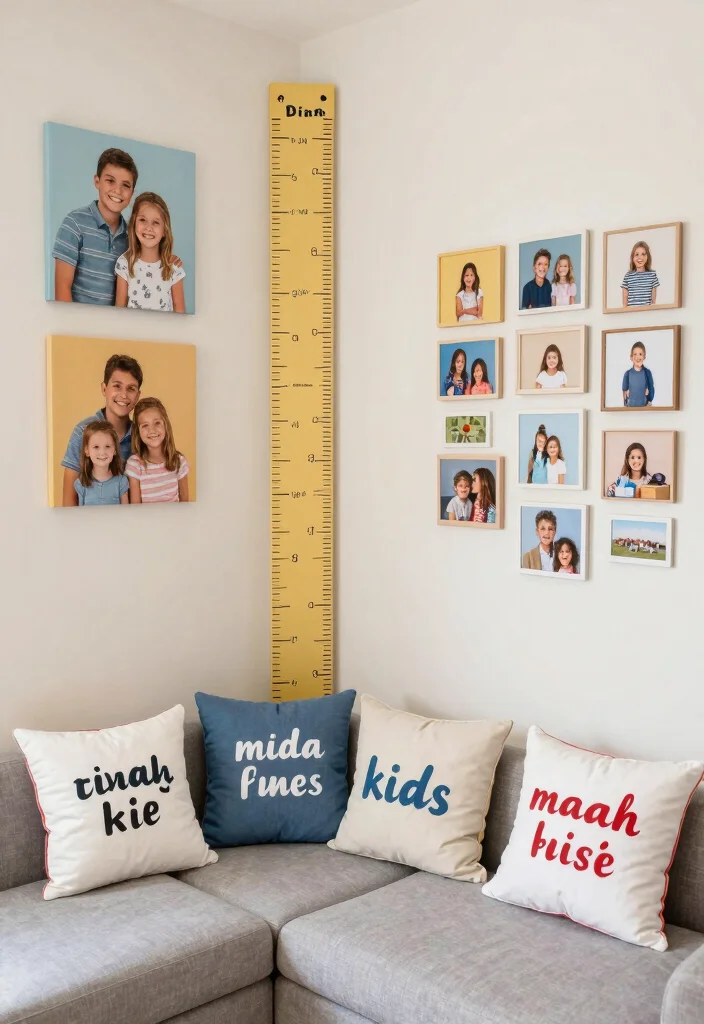
Adding personalized touches can make a kids’ living room feel uniquely special. Consider custom cushions featuring their names or artwork that highlights family memories. Kids’ growth charts can be integrated into the decor, serving both a functional and decorative purpose. Personalizing the space with their favorite colors and themes allows the room to truly reflect their personality.
Involve your kids in the decorating process, letting them choose colors or items they love. Create a special display area for achievements, like a memory wall, to celebrate their milestones. Family photos in playful frames can add warmth and a sense of belonging to the space.
Try these ideas for personalizing your living room:
– Let kids choose colors and items they love.
– Create a memory wall for their achievements.
– Frame family photos in fun, colorful styles.
These personalized elements create a warm atmosphere, helping children feel proud and connected to their special space.
Personalized Touches
Editor’s Choice


10. Flexible Spaces for Movement
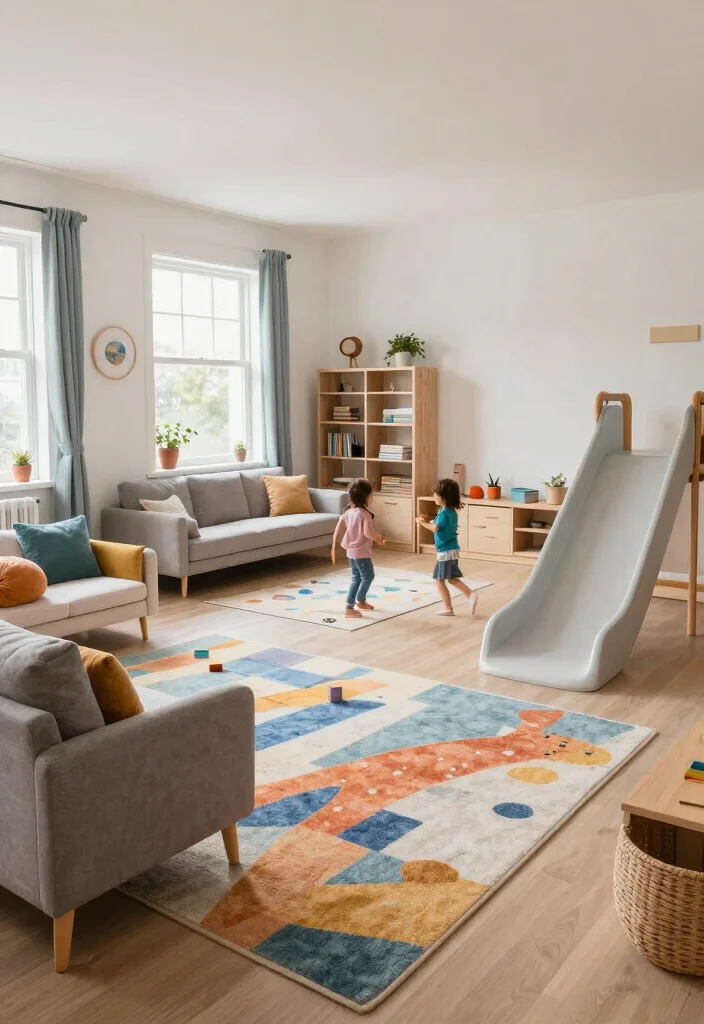
Kids thrive in flexible spaces that allow for movement and adaptability. Use lightweight furniture that can be easily rearranged for various activities, from playing games to hosting friends. Open areas should be designed for dancing, playing, or simply being active, promoting a dynamic environment. Incorporating a small indoor slide or climbing structure can safely stimulate physical activity.
Keep pathways clear to encourage spontaneous play and movement throughout the space. Area rugs can define different activity zones, providing soft surfaces for play. Smart storage solutions can ensure quick clean-up after active sessions, maintaining an organized and inviting atmosphere.
Optimize movement with these strategies:
– Keep pathways clear for spontaneous play.
– Use area rugs to define activity zones.
– Include quick-clean storage solutions for ease.
Flexible spaces inspire physical activity and social interaction, creating a vibrant and fun environment for children.
Flexible Spaces for Movement
Editor’s Choice


11. Tech-Free Zones
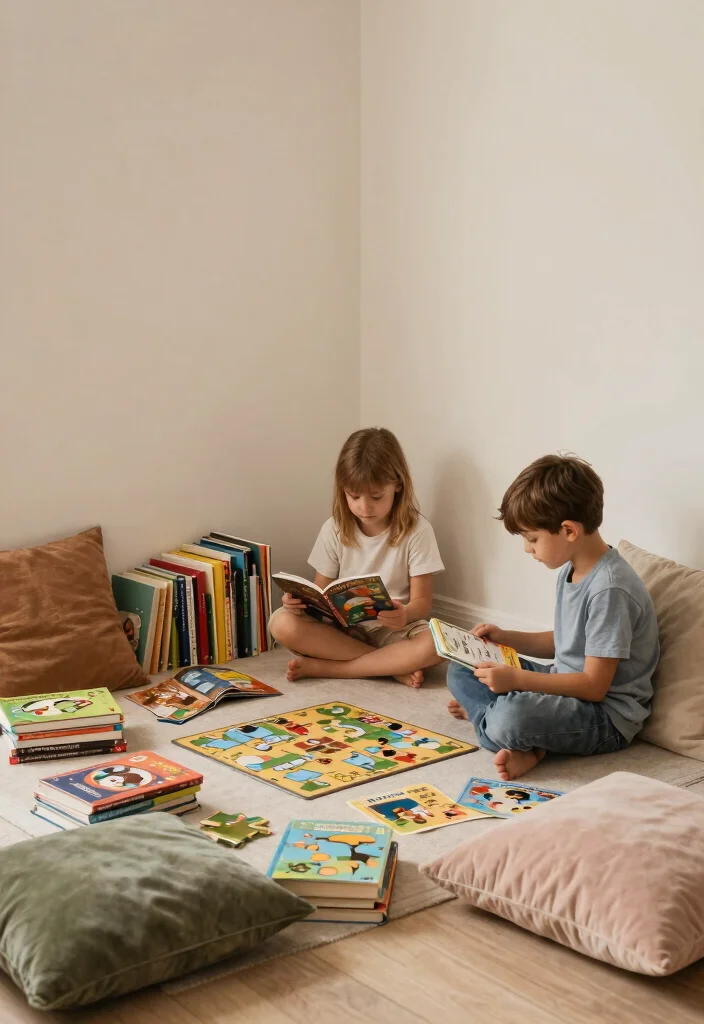
In today’s tech-driven world, establishing tech-free zones is vital for fostering real interaction and imaginative play. Create a cozy nook filled with books, puzzles, and board games, encouraging family bonding without screens. This area should feel inviting, featuring comfy seating and ample light for reading. Setting designated unplugged hours can promote face-to-face interaction, enhancing creativity and connection.
Arrange family game nights in this space to strengthen relationships and create lasting memories. Incorporate elements like a chalkboard wall for drawing and writing, adding a creative flair. Soft lighting can help create a calming atmosphere, making it a perfect escape from technology.
Enhance your tech-free zone with these ideas:
– Schedule family game nights for quality time.
– Add a chalkboard wall for creative expression.
– Use soft lighting to create a peaceful vibe.
Tech-free zones cultivate meaningful connections and encourage creative thinking, enriching family time together.
12. Eco-Conscious Practices
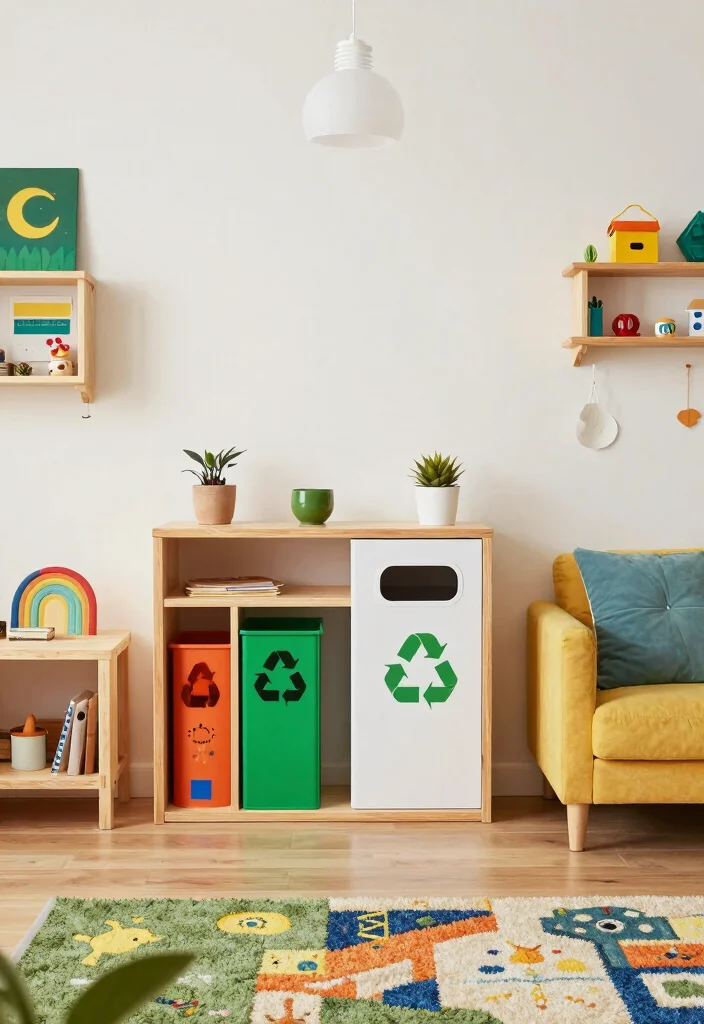
Incorporating eco-conscious practices into your living room design is a fantastic way to instill sustainability values in kids. Utilize natural and recycled materials for both decor and furniture, creating a stylish yet responsible space. Engage your children in caring for their environment by involving them in cleaning and organizing tasks. Consider energy-efficient lighting and upcycled craft projects to teach them the importance of sustainability.
Participate in community clean-up events or recycling projects together to foster a sense of responsibility. A DIY recycling station can encourage kids to sort materials easily. Discuss everyday sustainability practices to reinforce the message of eco-friendliness.
Explore these eco-conscious practices for your living space:
– Join local clean-up events for community involvement.
– Set up a DIY recycling station for easy access.
– Talk about sustainability in daily life.
Adopting eco-conscious practices not only beautifies your living area but also nurtures a sense of responsibility and care for the planet in your children.
Eco-Conscious Practices
Editor’s Choice


Conclusion
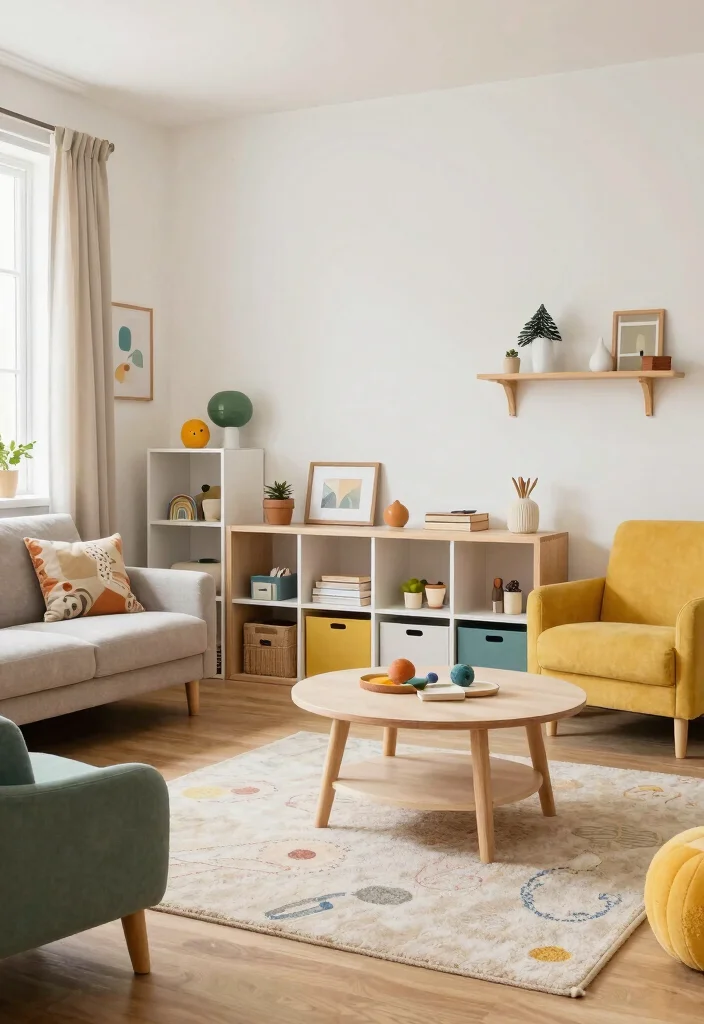
Revamping your kids’ living room into a space that combines fun, durability, and eco-friendliness is a rewarding journey. Each of these ideas can create a vibrant and engaging environment where memories are made. Whether it’s playful furniture, colorful decor, or innovative storage solutions, your living room can become a cherished space that reflects your family’s personality and values. Embrace these trends to foster a haven that supports creativity, learning, and sustainable living.
Note: We aim to provide accurate product links, but some may occasionally expire or become unavailable. If this happens, please search directly on Amazon for the product or a suitable alternative.
This post contains Amazon affiliate links, meaning we may earn a small commission if you purchase through our links, at no extra cost to you.
Frequently Asked Questions
What are the most durable, eco-friendly materials I should choose for these kids living room ideas?
For a space built to withstand play and spills, start with FSC-certified wood furniture, bamboo, or cork. Use low-VOC paints and finishes to keep the air clean.
Choose natural fiber textiles like organic cotton, linen, or wool for colorful decor and cozy seating, and opt for washable slipcovers or stain-resistant fabrics to keep cozy seating looking fresh. Add rugs in natural fibers such as jute or sisal for durability and easy cleaning. Look for certifications like OEKO-TEX or GOTS to ensure safety for kids. With these materials, your kids living room ideas stay durable and eco-friendly.
How can I incorporate playful furniture and storage solutions without sacrificing sustainability in these kids living room ideas?
Choose modular pieces that double as storage, like ottomans with hidden bins, low bookshelves, and stackable stools. Use sturdy wood frames with washable fabric. Use baskets and bins in natural fibers (cotton canvas, seagrass, wicker) labeled for kids to grab-and-go. Keep a color palette to keep the room cohesive; use colorful decor via pillows and wall art that can be rotated easily. Recycle or repurpose old furniture when possible, and select pieces with durable finishes to survive years of kid activity. These steps give you practical storage solutions that fit the kids living room ideas theme.
What are some cozy seating options that are both kid-friendly and eco-friendly for these ideas?
Opt for slipcovered sofas with washable covers, bean bags made from recycled fabrics, floor cushions or poufs, and an ottoman or bench with hidden storage. Choose soft, durable fabrics like canvas or denim and use a thick, washable rug for comfort. Ensure cushions and furniture have rounded edges for safety. Creating a cozy seating area is key to daily play, reading, and lounging, and with eco-friendly choices, you keep sustainability front and center. This fits well with kids living room ideas.
How can I add color and texture to these eco-friendly kids living room ideas while keeping things durable?
Use low-VOC paints for accent walls in bright colors, then layer with colorful decor such as cushions, throws, and art made from sustainable materials. Choose heirloom-looking textiles in organic cotton and wool, and add removable wall decals or framed art that can be swapped. Use natural-fiber rugs in vibrant tones to anchor the space. Creative themes like jungle or space can be introduced with removable accessories so the core furniture stays durable and easy to clean. Your creative themes shine through, and your kids living room ideas stay durable.
What quick, practical steps can I take to implement these eco-friendly kids living room ideas today?
Start with a small set of durable pieces (a sturdy sofa, a storage cabinet, a washable rug) and build around them. Upcycle or repurpose items you already own, paint boldly but safely with low-VOC paints, and add easy storage solutions to cut clutter. Choose playful furniture and colorful decor that kids love, but select materials that are easy to clean and built to last. Involve kids in choosing themes to boost enthusiasm and ownership; keep the plan flexible so you can swap items as tastes evolve within the kids living room ideas framework.